Environmental Physicist
Environmental physicists learn how environmental factors influence earth, water and atmosphere. They use math to explain patterns they see in nature. They consider energy conservation, water concentration, nutrients, air, and both man-made and natural materials. This helps physicists learn the laws that govern nature in order to better explain environmental systems and how people impact those systems.
A Day in the Job
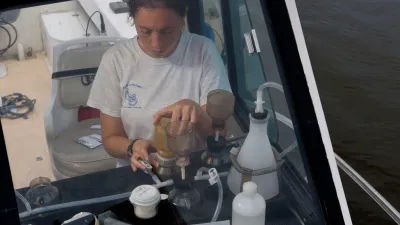
An environmental physicist typically focuses on research. In their daily work, they may collect soil, air and water samples, run experiments, develop plans to help prevent or mitigate pollution, and work collaboratively with others. They often work with data to solve problems and learn how the environment works. They work in teams and have lots of opportunities to collaborate with people in the same or different fields.
Work Takes Place
Skills
Career Categories
Protecting the Natural World Investigating the Environment
Potential Employers
Federal government agencies such as the National Oceanic and Atmospheric Administration and U.S. Environmental Protection Agency
State environmental departments
Research laboratories and universities
Environmental and engineering consultants